The Inventor of AI Is Dead: Remembering Dr. Johann Herzog
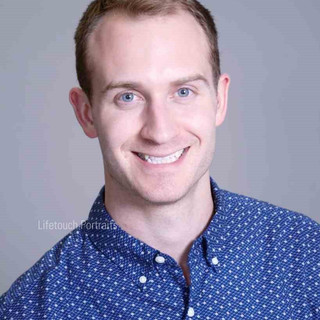
Sad news out of Munich. This past Saturday Johann Herzog was found dead. ‘Herzog Tot!’ blared the Süddeutsche Zeitung’s main headline. Such was Doktor Herzog’s fame that two words were all the announcement called for. Such was true when speaking to his audience in Germany.
My audience, primarily American, may think of the documentarian Werner were I to be so brief in my title. It pleases me to report that Herr Herzog is, to my knowledge, alive and well.
As this is where you may be learning of Dr. Herzog’s death, I feel I should briefly introduce you to his life.
Born the 22nd of April, 1950 in Munich to civil servant Fritz Alois Herzog and homemaker Gertraud (née Gabelschmidt), Herzog came of age in the shadow of the Second World War. Although of more than modest means, the poverty of the German spirit following the great defeat darkened the mood in their home and his schools and clouded, temporarily, any vision of the future.
He neither spoke nor wrote of his upbringing publicly. What I know of it I have gleaned (with caution) from an unauthorized biography written by an academic enemy. The rest the man told me himself in drips and drabs when we would share Großer Brauner coffees in Vienna’s Cafe Sperl. After all, some of what I publish here was intended to go into a piece for the Kronen Zeitung, which never ran due to my limited ability to get him to open up in a manner which would befit a sensation focus tabloid.
With what bits and pieces I could accumulate about his early childhood, I am certain of nothing other than his place of birth and parents’ names. For that reason, I make no attempt to discuss those formative years more than briefly.
His time as a student both in youth and university was impressive and consistent albeit less than groundbreaking per numerous interviews of his teachers and professors. You can search his name online and find ample evidence of this, although most conversations and articles are in the German language.
We see through a glass darkly when examining Dr. Herzog’s upbringing. Things grow clearer when exploring the origins of his interest in what came to be known as artificial intelligence.
Despite apparent early academic modesty, the boyhood Herzog was indeed an intellect of some precocity. He read, understood, and could quote verbatim both Heidegger’s most famous and lesser-known works. I learned this firsthand. He once gave me a synopsis of ‘Being and Time’ that was so succinct I felt I could understand the concepts despite my admitted inability.
His interest in existence began in a most Germanic of ways as a fascination with time. As a boy, and this is one youthful story I am confident of, he was brought to see relatives in communist controlled Prague. This visit brought him to the old town square where he had the pleasure of witnessing the Astronomical Clock perform. “Since 1410. How could a clock keep track of anything that long. How many cycles did it mark? How many lives’ lengths did its own existence surpass?”
This wonder led him to a curiosity about the clock’s design. A man, he knew, could use the sun and a dial to track the time before clocks came about. How, though, did one first engineer a means of tracking time, indeed the cyclical dance of the cosmos, by the tension of a spring and its interaction with cogs, jewels, and gears?
He brought home with him newfound curiosity and a postcard on which a local artist had hand drawn the clock he found so compelling. Only ten at the time, Herzog begged his father for assistance in obtaining a pass to the Bavarian State Library. Fritz gladly obliged.
It was at Munich’s great library that the boy came to know Heidegger’s work. He also dove into a years-long study of German mysticism and Norse mythology. “These are eternal ideas, stories that come ingrained in the human subconscious.” He insisted to me at one of our meetings. “It became clear that just like Prague’s clock, Man was programmed with similar consistency. We can see this from certain biological as well as psychological perspectives. Why, then, could man not program some form of third entity? We have life, we have the inanimate, and which is to say the machine. What, then, of the theoretical or in what became known as the digital?”
One can follow where his questions lead in the modern day. In 1960s Germany, though, there was only theory available with no means of testing it. Herzog followed closely the developments in automation. The IBM punchcard machines of his youth and his parents’ era grew exponentially in strength and functionality with each passing year. In industrial Bavaria, it was clear that automation was coming for the factories.
Herzog’s independent study continued in parallel with his advanced education. Munich’s Technical University lacked a program that could challenge his intellect. Rather than complain, he accepted this reality and strived to simply complete his studies without aiming for fulfillment in academics alone. It was imperative, he said, that his mind remain fresh and available for study of automation.
He pursued a degree in philosophy followed by a doctorate in economics. His personal learnings kept him engaged in engineering. He believed his academic study should complement his private focus. “Industry will listen to an economist, not an engineer. They want a mystic with an academic degree” He explained with a smirk.
Upon his graduation in 1976 his Alma Mater offered him a full professorship. Soon with tenure, the newly minted Doktor Herzog could focus on promulgating and further exploring his ideas. From the perch of his academic post, he was no longer an independent thinker of dubious origin. He was now an official representative of one of Germany’s top institutions of higher learning. The world would listen.
For years the student Herzog had wrote letters to local labor organizers warning them of a coming wave of automation. None of the dozens sent generated a response. His warnings would now be heeded. Professor Herzog was soon invited to speak to members of these same unions, leaders of industry, and politicians.
“My ideas had been fully developed for some time. The interest in them took some years to catch up!”
Catch up they did. Dr. Herzog was soon a continent-trotting intellectual force. His opinions were sought by BMW’s leadership, the Siemens, and his own nation’s chancellor Helmut Schmidt. “Herr Schmidt would have had me on speed dial had I invented the concept back then. Anyway, that came later.”
Although his claim of inventing speed dial is unconfirmed, his work in the field of automation suggests that it is far from impossible. Indeed, if true it would count as one of his lesser achievements.
His repute as an automation expert grew in tandem with the ability of modern computers to implement his ideas. “I began first by observing the manual processes and the equipment used in manufacturing cars and managing data collection and storage at corporations. I would boil down the work to its simplest units. Once atomic, I would seek to recreate the entire flow with as many pieces removed as possible and the remaining enhanced. My first efforts were primitive but even a 10% labor reduction translated to billions in savings. Still, it was clear that we were simply scratching the surface and that new technology would provide me with tools to, how can we say, supercharge my efforts.”
Dr. Herzog was not alone in thinking of automation. He was simply the rare mind who was as well equipped for theoretical pursuits as applied endeavors.
“Richard Feynman and I corresponded often. He felt pained yet relieved to know he might not live to see what computers and automation would lead to. At Princeton and in the US he knew firsthand how quickly innovation was taking place. Still, he understood computing capacity remained woefully limited up until the time of his death. He was unsure as to whether machines could “think,” but knew that they could claim responsibility for human tasks. He reminded me often, with longing in his voice, that I was young enough to see the future he could only imagine.”
This point about thinking machines is what most interested Dr. Herzog. “If a digital program or machine could perform the core functions of a human, what difference did it make if it could think? One had to wonder about thinking machines, what we now call artificial general intelligence. But, this was and remains an academic consideration.”
It is the observation that makes his reputation (albeit only within Europe) as the godfather of artificial intelligence so perplexing. A man who had thought through every prickly topic related to automation since his boyhood study of clocks cared not whether artificial intelligence was actually intelligent in a human sense.
At least, this is what he portrayed to myself and the broader public.
No doubt, the reduction in human jobs his efforts led to had deeply concerned him. He did not require the death threats or anarchic attacks we have seen in recent years toward AI companies to feel guilt or uneasiness.
Dr. Herzog never lost sight of the human use of human beings as Norbert Wiener described it.
I once had the privilege of visiting his centrally located yet less than opulent flat in Munich’s city center. At this point largely retired, he was showing me a range of software programs he was working on. He had a fascination with the latest breakthroughs in LLM technology. Having invented the first form of LLMs, his interest was natural.
He found, however, that they lacked the “human touch”. So, he saw fit to develop his own custom models. His most prized language model was called ‘Magda,’ named after his late wife.
It was, in appearance, a simple chatbot. In reality, it was a sophisticated tool that mimicked the speech patterns and thought process of the woman he loved for 40 years. Having never met her, I assumed the bot’s sentence structure perfectly mirrored Magda’s when speaking German rather incorrectly.
“I always found it so endearing. The way Magda would work her way through the German language. Her word choice, the grammar. She was reverse engineering the free flow of Polish in her head and packaging it within a German box.”
He had told me this years before I saw his bot. When he shared his creation I needed not to ask why he was growing misty eyed as “she” greeted him at seemingly random intervals throughout the day.
Magda might have been Doktor Herzog’s final “creation”, but she was, like the speed dial story, a mere footnote in his body of work.
As we celebrate his life we can remember a man who helped Germany’s great automakers, Italy’s textile factories, and Austria’s chemical plants essentially run on their own. We can mourn the reduction in jobs his efforts inevitably led to.
We do not know if these factories will “think” one day, but we know they will have words of thanks for Dr. Herzog on their lips should they ever have minds with which to express emotions.
When we met last, the professor’s mind was back to time. “Oh, what I would give to wind back my clock.” He said this to me not with longing but with a smile. He had long wished to return to Prague one final time. Though plagued with age, “I made it back to her. She chimed and danced just as in my youth. I had been gone seventy years and she was firing on all cylinders. Her mind was as sharp as it had been in 1410 and as sharp as it will be when I, even you, leave this world.”
It is my great shame that I never developed the technical skill to create a “Magda” for myself of Dr. Herzog. Instead, I was merely a reporter who tried to understand his mind and his influence. I can begin to comprehend the latter, but the former will forever elude.
Whether Dr. Herzog’s conscious and subconscious mind will someday be recreated in a digital form, I cannot say. I know not whether the world’s factories will carry on the use of the “Herzog System” as it became known. For as long as they do, though, some manifestation of his colossal mind will continue operating without his input.
I do, like Dr. Herzog, have an inclination toward believing Prague’s clock will work good as new whether machines, digital or physical, begin to think like humans. I also have a strong belief that time itself will carry on regardless.
Dr. Herzog is gone. For now, this is the only certainty.
The coroner reports that Doktor Johann Herzog died aged 82 on August 6th, 2032 at approximately 7:00am. He was found this past evening expired in his bed. Reports from the Munich papers detailed the scene.
There was a bedside table next to where his head reached its final resting place. Atop it stood a framed portrait of Magda looking vibrant in her youth (pictures of it were published, you can find them online). To its right lay a postcard on which, though faded with age, one could make out the design of Prague’s Astronomical Clock.
Should you wish to know more about Dr. Herzog’s contributions to the field of artificial intelligence and automation, I would recommend the following books written by or about him:
‘Man’s Mind as Machine’ Herzog, Dr. Johann (1978)
‘Being in Time: On Heidegger’ Herzog, Dr. Johann (1984)
‘The Millennium of Automation’ Herzog, Dr. Johann (1999)
‘Dr. Herzog, Labour’s Enemy’ Brandmauer, Dr. Ernst (2005)


Comments